
Life in Ancient Egypt: What Everyday Society Was Really Like
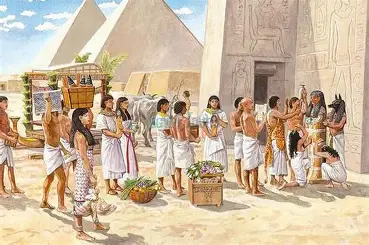
Imagine entering a sun-baked brick home, waking up to the soft flow of the Nile, and getting ready for a day filled with business, farming, and deep spiritual beliefs. While great pharaohs, gilded masks, and enormous pyramids are frequently shown in popular culture, the common person’s life in ancient Egypt was actually a rich tapestry of hard work, family, and structure.
Gaining insight into the daily lives of common Egyptians provides a fascinating glimpse into one of the longest-lasting civilizations in history.
Everyday Life, Social Classes, and the Nile’s Function
Ancient Egyptian society was structured like a strict pyramid. Viziers, priests, scribes, noblemen, warriors, artisans, and peasant farmers sat at the base, while the Pharaoh, regarded as a living divinity, sat at the top.
The Nile River was the center of life in ancient Egypt. Farmers were able to plant staple crops like flax, barley, and emmer wheat because of the rich silt that was spread throughout the country by yearly flooding.
Houses, Food, and Clothes
Housing: Sun-dried mud bricks were used to build the flat-roofed homes that the average Egyptian lived in, keeping the interior cool from the heat of the desert.
Diet: Onions, garlic, lentils, fish, and figs were added to the Egyptian diet, which was mostly composed of wheat bread and beer. Usually, meat was saved for festivals and more affluent homes.
Clothes: Because of the warm weather, flax-based linen was the main fabric. Women wore fitting sheath dresses, while males wore simple kilts. Kohl was put around the eyes by both sexes to shield them from the intense light and glare.
Family structure, medicine, and beliefs
Egyptian culture placed a strong emphasis on family. Compared to other ancient civilizations, women had a very high degree of legal independence — they could own property, start divorces, and manage businesses — and marriage was viewed as a natural life milestone.
Religious convictions influenced day-to-day choices. To fend against bad luck and guaranty a safe transition into the afterlife, people carried amulets that represented gods like Osiris, Isis, and Anubis.
ancientrush.website





Leave a Reply