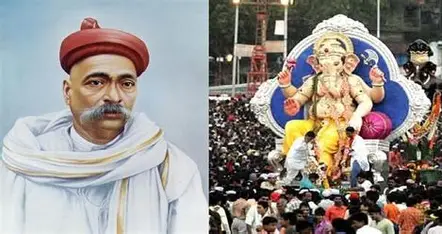
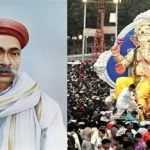
One creative leader transformed a peaceful, home custom into an unstoppable national movement when colonial authorities applied harsh curfews to shut down public meetings throughout Maharashtra. In addition to fighting for independence, Bal Gangadhar Tilak, also known as Lokmanya, created a cultural revolution that changed the course of India’s independence movement.
This is how Lokmanya Tilak turned Ganesh Chaturthi from a private home ritual into a powerful force for independence, resistance, and national cohesion.
-
- An LLB Graduate’s Legal Brilliance
Tilak developed his analytical skills and earned his LLB degree at Pune, Maharashtra, long before he became the spokesperson for Indian nationalism. He was able to precisely negotiate the harsh British censorship regulations because to his legal knowledge. Acknowledging that the British government forbade political gatherings but was reluctant to actively meddle in religious practices, Tilak discovered an important legal loop: it was difficult to outlaw public religious festivities without inciting widespread social disturbance.
-
- Roots at Deccan College: Combining Mass Movement with Academics
Tilak was exposed to both traditional Indian literature and contemporary Western political ideas during his early years at Deccan College in Pune. He came to the conclusion that cerebral discourse in college classrooms would never free India; instead, the populace required an accessible and emotional focal point. He bridged the divide between working-class people and elite universities by basing his political approach on cultural heritage.
- Roots at Deccan College: Combining Mass Movement with Academics
-
- Converting Domestic Worship into Public Activism (1893)
Ganesh Chaturthi was exclusively a private family celebration held in homes prior to 1893. Tilak took a risk after seeing how British divide-and-rule strategies and community riots were shattering society. At Keshavji Naik Chawl in Girgaon, Mumbai, he organized the first public (Sarvajanik) Ganeshotsav, establishing an open area where all Indians, regardless of caste, wealth, or background, might gather.
- Converting Domestic Worship into Public Activism (1893)
-
- Overcoming Fear with Group Devotion
Fear was an unseen barrier preventing millions of people from speaking up during British rule. Tilak recognized that although group involvement provided safety, individual opposition left civilians open to police aggression. He methodically destroyed the psychology of fear and replaced it with collective bravery by bringing thousands of people together in public places to yell, sing, and celebrate.
- Overcoming Fear with Group Devotion
-
- Establishing a Forum for Covert Political Conversation
The 10 days of Ganeshotsav were a cover for calculated political mobilization, not just a religious celebration. In front of colonial spies, independence fighters gave powerful speeches, distributed patriotic material, and gathered money for the national struggle under the pretense of festival lectures.
- Establishing a Forum for Covert Political Conversation
-
- Using Mandals to Strengthen Local Communities
By promoting the establishment of regional Ganesh Mandals around Pune, Mumbai, and finally the entire country, Tilak decentralized the movement. These community-led committees organized communal welfare, provided local leaders with practical experience in administration, and cultivated a strong feeling of civic duty that persisted long after the festival was done.
- Using Mandals to Strengthen Local Communities
-
- Using Folk Culture, Music, and the Arts to Promote Mass Literacy
Tilak used ancient cultural forms like street theater, Pawadas (ballads), and Mela songs because he recognized that a significant section of the populace lacked literacy. Local musicians turned festival platforms into grassroots teaching centers by writing lyrics that addressed British exploitation, taxes, and the value of Swadeshi (self-reliance).
- Using Folk Culture, Music, and the Arts to Promote Mass Literacy
-
- Including Women and Historically Underrepresented Groups in Public Life
Social constraints prevented women and members of lower castes from participating in public political forums in 19th-century India. Tilak dismantled centuries-old societal boundaries by making the Sarvajanik Ganeshotsav accessible to everyone. Public festival pandals evolved into welcoming areas where many groups collaborated to construct stages, cook meals, and take part in processions.
- Including Women and Historically Underrepresented Groups in Public Life
-
- Using the Press as a Weapon: Kesari and Mahratta
Tilak issued strong editorials urging people all throughout India to embrace the public festival concept in his well-known publications, Kesari (in Marathi) and Mahratta (in English). The movement quickly expanded beyond Maharashtra to places like Gujarat, Andhra Pradesh, and Bengal thanks to his writings, which clarified the socio-political imperative of unification.
- Using the Press as a Weapon: Kesari and Mahratta
-
- Creating the Model for Contemporary Indian Nationalism
Tilak’s greatest achievement was demonstrating that cultural pride, not colonial absorption, was India’s route to independence. He established the groundwork for popular mobilization that leaders like Mahatma Gandhi subsequently developed into national civil disobedience actions by associating spiritual faith with Swaraj (self-rule).
- Creating the Model for Contemporary Indian Nationalism
The Lasting Impact of Lokmanya Tilak’s Ideahttps://en.wikipedia.org/wiki/Ganesh_Chaturthi
One of India’s most colorful cultural celebrations, it started in the ancient alleyways of Pune, Maharashtra, as a calculated reaction against colonial tyranny. A straightforward celebration was transformed into an enduring symbol of solidarity, strength, and national pride by Lokmanya Tilak’s masterful combination of his LLB legal expertise, his intellectual foundation from Deccan College, and his profound love for the country.
Who Was the First Mughal Emperor? Babur’s Brilliant Rise




Leave a Reply